

Drawings and documents
USPTO scan
The patent as scanned by the USPTO
-
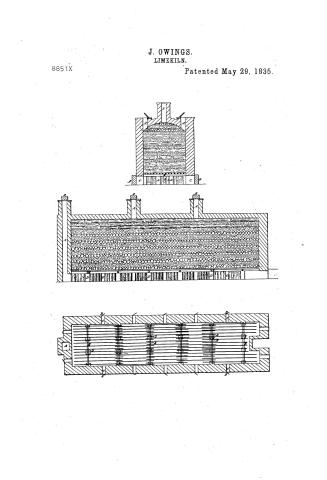 Page 1
-
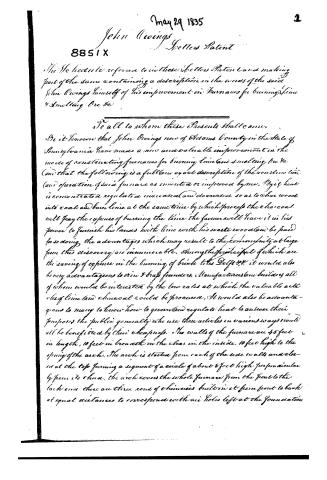 Page 2
-
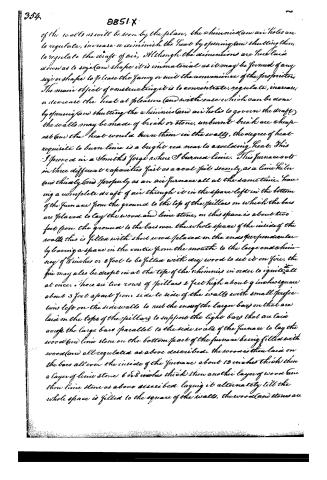 Page 3
-
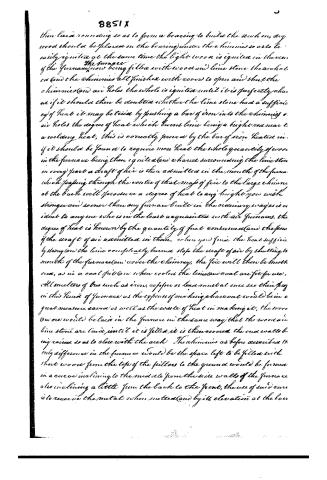 Page 4
-
 Page 5


U.S. Patent and Trademark Office · Google Patents
Published accounts: journal notice
Notice in the monthly list of patents, with remarks
Journal of the Franklin Institute, new ser., vol. 16 (1835), p. 403 · View the page
50. For Furnaces for Burning Lime, and Smelting Ores; John Owings, Adams county, Pennsylvania, May 29.
Remarks. Much more is proposed in the specification of this patent than will ever be accomplished by the patentee, but this is a case so frequent, that it ought to produce but little disappointment. By means of the kiln, or furnace, described, wood is to be converted into charcoal, and by means of the heat evolved in this process, lime is to be burnt, and iron, and other, ores reduced. A furnace is to be built, the side walls of which may be forty-five feet in length, and ten feet in height, leaving ten feet in the clear between them; this furnace is to be arched over from end to end, and at its bottom there are to be grate bars, at the height of two feet from the ground, a number of pillars being built to support them. Several air holes are to open into the space under the bars, all of them furnished with air-tight shutters; there are also several flues on each side, and a main flue at one end, all capable of being closed when necessary. The wood to be converted into charcoal, is to be first placed upon the bars, to the height of a foot, and upon this six inches of limestone, which is to be succeeded by alternate layers of each, until the furnace is filled to the top of the arch. When ores are to be reduced, they are to take the place of the limestone, and the bottom of the furnace is to be so constructed as to receive and conduct the reduced metal to the front, whence it is to be drawn off. When the reduction has not been completed by the charring process, air is to be admitted, so as to allow the charcoal to burn partially, until the heat is sufficient; after which the residue is to be collected. If pit coal is used, it is to produce coke in the same way, which also is to be saved. What is claimed as new, "is the use of a raised floor, or grating, whereon to rest the stone, or ore, and fuel, in combination with the vents, as herein set forth, by which the heat of the furnace is rendered perfectly manageable, and the balance of the fuel, after the operation of burning, or smelting, is converted into charcoal, or coke, when wood, or bituminous coal, is used." The patentee has set forth numerous advantages which are to result from his invention, "the principal of which are the saving of fuel in the burning of brick, tiles, delft, &c., &c.; to iron and brass founders, manufacturers, and builders, all of which would be interested by the low rate at which the valuable articles of lime and charcoal could be procured," &c.; from the whole affair, however, it is plain that he is neither an experienced lime burner, an iron founder, or a smelter of other metals; if the former, it would not have been necessary for him to have discovered, by the aid of a smiths' forge, that lime acquires about a welding heat for calcination; and if a founder, he would never talk of reducing iron ore by means of wood, or coal, alone, and saving the charcoal, or coke.
About this record
- Patentee
- DATAMP
- Date
- the Name and Date index of patents, DATAMP, USPTO records
- Invention
- DATAMP
- Listed in
- the Name and Date index of patents, DATAMP, USPTO records, Jim Shaw's X-patent list, the Journal of the Franklin Institute, Burke's List of Patents (1847)
- in_burke