

Drawings and documents
USPTO scan
The patent as scanned by the USPTO
-
 Page 1
-
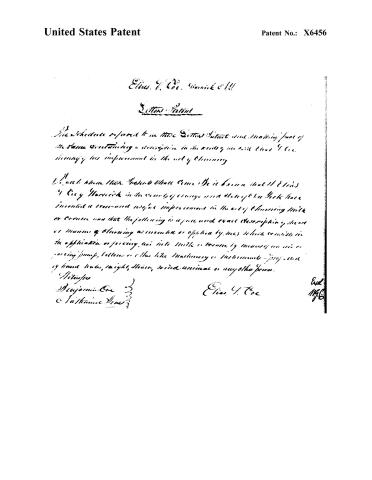 Page 2


U.S. Patent and Trademark Office · Google Patents
Published accounts: journal notice
Notice in the monthly list of patents, with remarks
Journal of the Franklin Institute, new ser., vol. 8 (1831), p. 109 · View the page
The third patent is7. For improvements in Metallurgical operations, in the manipulation of metals in general, with bituminous coal, charcoal, coke, wood, peat, &c. April 5.
Remarks. The series occupy forty well filled pages, and furnish an essay on metallurgical operations, rather than a mere detail of the improvements claimed, and such other matter as might be necessary to render the nature of these improvements clear and intelligible. The drawings contain 21 separate representations of furnaces in section. To give an analysis of these patents would demand more time and space than we can afford. In the first there are six leading improvements claimed. First. The concentration of heat, by the construction of the furnaces, as exemplified in the drawings. Second. Separating the ore from the coal, or any other combustible matter, and preserving them separate from each other during the manipulations. Third. Separating the metals in a lower or secondary reverberatory furnace, or furnaces, sometimes preserved at a regular and uniform temperature by additional fires. Fourth. Employing in this system not merely anthracite, but other kinds of fuel, and using not reverberatory only, but other kinds of furnaces. Fifth. Dispensing with the large quantity of oxygen gas which is usually forced into furnaces when the ore is in fusion. Sixth. The reducing the iron to a malleable state at one operation without exposing the cast iron to the injurious effects of the oxygen contained in the atmosphere. The second specification describes the modes in which a combination of sand and clay is to be used in the furnaces, which mixture is to form a covering, or flux, to protect the ore and the fused metal from oxidation, volatilization, &c. and likewise the structure of the furnaces used by the patentee; the principle upon which these are constructed, it is stated, may admit of numerous modifications: the general principles, or modes of operation, however they may be modified, are claimed as the objects of the patent. The third specification principally points out modifications in the manipulations, and furnaces, adapting them to the use of fuel other than anthracite. The intelligence displayed in the general contents of these specifications inspires a belief in the value of the system adopted. This is no place for a critique upon the theoretical parts of the instruments before us, many of which, although they evince some acquaintance with chemistry, are very far from being invulnerable. If the processes are good, these mistakes are of little practical importance, and we name them principally for the purpose of stating that a specification of an invention, or discovery, is not an instrument of reasoning, but of description merely; that its object is to inform us how, rather than why, a particular thing is done. There are but few of those specifications which extend to twenty or thirty pages, as many do, which might not present every thing that is new, and requisite, in less than one-fourth of the space, and with more advantage to the public. We are fully aware that the aim of those who draw them up at such length, is to give in full detail every thing which appears to them to bear upon the subject, and that although unnecessarily long, the motive for making them so is praiseworthy.
Published accounts: journal notice
Notice in the monthly list of patents, with remarks
Journal of the Franklin Institute, new ser., vol. 8 (1831), p. 113 · View the page
20. For an improvement in the art of Churning; Elias V. Coe, Warwick, Orange county, New York, April 7.
Remarks. "The following is a full and exact description of the art or manner of churning as invented or applied by me; which consists in the VOL. VIII.-No. 2. - AUGUST, 1831. 15 application or forcing air into milk or cream, by means of an air or forcing pump, bellows, or other like machinery or instruments, propelled by hand, water, weight, steam, wind, animal, or any other power. ELIAS V. COE." The foregoing brief, but emphatic, lines, constitute the whole of the specification. There, however, is a drawing accompanying it, with copious references, in which a jack is represented, which is to be driven by a weight of 300 pounds; this weight, through the intervention of the requisite wheel work, a part of which is "a wheel of three feet diameter, with 120 teeth," works two pair of small bellows which blow their wind through a leather tube into the barrel of cream. The whole appears to us rather airy, notwithstanding the great weight employed.
About this record
- Patentee
- DATAMP
- Date
- the Name and Date index of patents, DATAMP, USPTO records
- Invention
- DATAMP
- Listed in
- the Name and Date index of patents, DATAMP, USPTO records, Jim Shaw's X-patent list, the Journal of the Franklin Institute, Burke's List of Patents (1847)
- in_burke