

Drawings and documents
USPTO scan
The patent as scanned by the USPTO
-
 Page 1
-
 Page 2
-
 Page 3
-
 Page 4


U.S. Patent and Trademark Office · Google Patents
Show the transcription Hide (1,007 words)
Machine transcription (LightOnOCR) of the pages as scanned by the USPTO, most of them the handwritten copies made when the records were restored after the 1836 fire. Not checked; it can misread handwriting, so compare it with the scan.
Page 1.
UNITED STATES PATENT OFFICE
PTO – BOYERS, PA DUTY STATION
PAGE NOT AVAILABLE
PATENT NUMBER X5023 FOR THE ISSUE DATE 3/4/1828 HAS BEEN SCANNED/LOADED, BUT WITH MISSING PAGE(S). UPON RECEIPT OF THE MISSING PAGE(S), THE ENTIRE DOCUMENT WILL BE RESCANNED. THIS NOTICE IS FOR THE MISSING PAGE CONTAINING:
Missing All Drawings
DATA CONVERSION OPERATION
BOYERS, PA
Page 2.
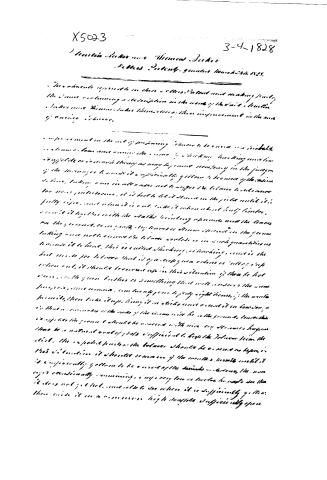
X5023
3-4-1828
> Martin Jackson and Thomas Jackson
> to Messrs. P. & Co., London March 24th 1828.
The above referred to these - letters. I have read and making fully
the same containing a description in the mode of the said Martin
Jackson and Thomas Jackson themselves of their improvement in the mode
of curing tobacco.
improvement in the art of preparing tobacco to be cured you included
a claim a law was during the course of striking looking more like
a cigarette or a much theory as may be found necessary in the judgment
of the manager to make it sufficiently yellow to become of the nature
of time, taking care in all cases not to suffer the tobacco to advance
too near perfection, it is best to let it stand on the pile until it is
fully ripe, and when it is out, take it when about half tinder,
cover it together with the stalks looking upwards and the leaves
on the ground, or in piles, the leaves or stems spread on the ground
looking more well around the tobacco so that it is in such quantities as
to make it to heat, this is called "shucking," or shucking, and is the
best mode for tobacco that is of a deep green colour or "till of" up
when out, it should be covered up in this situation if there be hot
weather, or the green bushes or something that will answer the same
purpose, some remain, can be kept green to pretty sight hours, if the weather
permits, then take it up, hang it on sticks and cover it in burlap or
so that no smoke or the dust of the room will be in the ground, until the
dust is off the ground should be covered with rain or dew, because burlap
there be a natural coat of mold sufficient to keep the tobacco from the
dust. The exposed parts of the tobacco should be covered as before, in
this situation it should remain if the weather permits until it
is sufficiently yellow to be cured of the desired ... texture, the more
exposed occasionally examining, if very low or too low to make sure that
it does not get hot, and able to see when it is sufficiently yellow,
then raise it on a common high scaffold sufficiently open
Page 3.
X5023
for the air and sun to take off the natural dampness should continued while the tobacco was near the ground, it may then be cured by a continuation of heat down as by fire, taking care not to let the tobacco be exposed to rain at any time after it is cut, or before when it commences curing. If it should be necessary on account of weather to carry the tobacco into the house before it is sufficiently yellow, it may be exposed on the house until it is in order for curing, as would the weather will permit the time exposed to be used.
Tobacco which has a yellowish appearance in the field when cut, may be put on the top to effect sooner as it is sufficiently tender to give the sticks, without either smoking or burning.
If the weather is unfavorable for preparing the tobacco for curing, or if the manager prefers having it in the house, it should be prepared in a temporary way so as to keep the taste of the tobacco from exposure to the wind till it becomes yellow.
The improvement in the art of curing or drying tobacco may consist by means of tiles by a channel way in the place of the house or by raising rows of mud, brick or stone to the form almost to make the pieces, which tiles or channels are covered with sheet iron or other metal.
The preferred mode is to dig three of these channels for a house twenty feet square, six inches into the ground, and about two inches wide, then make from one foot above ground, the channels to be covered with sheet iron or other metal two feet wide. The metal to commence about two feet from the wall, the two outside channels are to run about two and a half feet from the side walls and to run within two inches half foot of the opposite end of the house from where they commence, from the extreme ends of the two outside channels there shall run a channel of the same size and description underneath in the same way two and a half feet from the walls, so
Page 4.
X5023
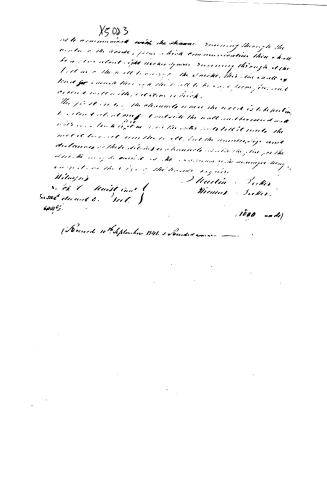
to communicate with the steam running through the walls of the house, from which communication there shall be a pipe about eight inches square running through all the floor as the wall to carry the smoke, this line shall be lined for smoke through the wall to be made from fire and extend well into the room or brick.
The first use of the channels where the need is to be found, to send a signal or to ventilate the wall and basement with fire. The chimney is the only way to let it make the smoke to come from the wall, but the mounting is not the distance of these different channels, so the pipe for the smoke may be made as the chimney with many things.
Wilmington
Martin & Tucker
Wilmington & Tucker
(1800 made)
(Recorded 10th September 1841. J. Pendergrass)
Published accounts: journal notice
Notice in the monthly list of patents
Journal of the Franklin Institute, vol. 6 (1828), p. 71 · View the page
In the mode of curing tobacco, Martin Baker & Thomas Baker, of Louisa County, Virginia, March 4.
About this record
- Patentee
- DATAMP
- Date
- DATAMP, USPTO records
- Invention
- DATAMP
- Listed in
- the Name and Date index of patents, DATAMP, USPTO records, Jim Shaw's X-patent list, the Journal of the Franklin Institute, the Mirror of the Patent Office (1828), S. A. Elliot's printed list of patents, Burke's List of Patents (1847)
- The sources give different dates; the date shown is the one most of them agree on.
- The Franklin Institute's journal confirms the date shown.
- The Mirror of the Patent Office's supplementary list gives the same patent.
- S. A. Elliot's printed list of patents gives the same name and date.
- Burke's 1847 Patent Office list gives the same patent.